Deadly Gamble weaves a carefully researched and compelling account of the greatest tragedy on the waters of the Chesapeake Bay and its consequences–not only in the loss of life, but in the regulatory review and changes in the oversight of passenger-carrying vessels. With her deep knowledge of maritime work and law, author Kathy Bergren Smith provides a rich context for the sinking of the Levin J. Marvil in Hurricane Connie. Pete Lester, Chief Curator, Chesapeake Bay Maritime Museum, St. Michaels, Maryland
Bill Verge joined the crew of the Levin J Marvel and changed the course of his life.
The summer of 1955, Bill Verge took a job as a deckhand on the old schooner that was sailing vacation cruises out of Annapolis. He had just completed his junior year in high school and was looking for some adventure. Boy did he ever find it!
Within the course of just a summer, Bill went from being a fairly typical highschooler to a would-be shipowner to a Coast Guard recruit. He never did get around to finishing high school.
Bill wasn’t on board for the last voyage of the Marvel. Instead, he was in Baltimore meeting with a group of investors who were willing to support his purchase of the ship with his friend and fellow deckhand, Steve MacDougall. What had started as a summer job looked like a good business opportunity to the sailors. The current owner and captain, John Meckling was struggling to keep up financially, and had decided to turn over the business to a new syndicate. If the ship had not sunk, Bill and Steve would have taken on the refitting and running of a Windjammer business on the bay. ,
Instead, the ship was lost, along with 14 lives. After this tragedy, there was a Coast Guard investigation followed by a federal trial of the captain on manslaughter charges. As the school year approached, Bill decided his days as a student were over. By the end of September, 1955, Bill verge was in Boot Camp in Cape May New Jersey as a Coast Guard recruit.
Bill at the beginning of his Coast Guard career
After his first four years in the US Coast Guard, heearned bachelor’s degree from University of Miami, where he was accepted without a high school diploma. Four years later, he rejoined the Coast Guard, serving a year in Vietnam and four as commanding officer of the organized reserve training center in Washington D.C. For four more years he worked for Henry DuPont as president of Cytec Inc., leaving to form an aviation company, Skyway Aviation. Two years he got on his boat and sailed to Florida. He spent 20 years operating, then owning marinas in Melbourne, Florida. Finally he moved to Key West, where he served as a city commissioner. He now chairman and executive director and founder of the Coast Guard cutter Ingham memorial museum in Key West.
Bill saved the ship from the scrapyard and has spearheaded it’s preservation for generations to come.
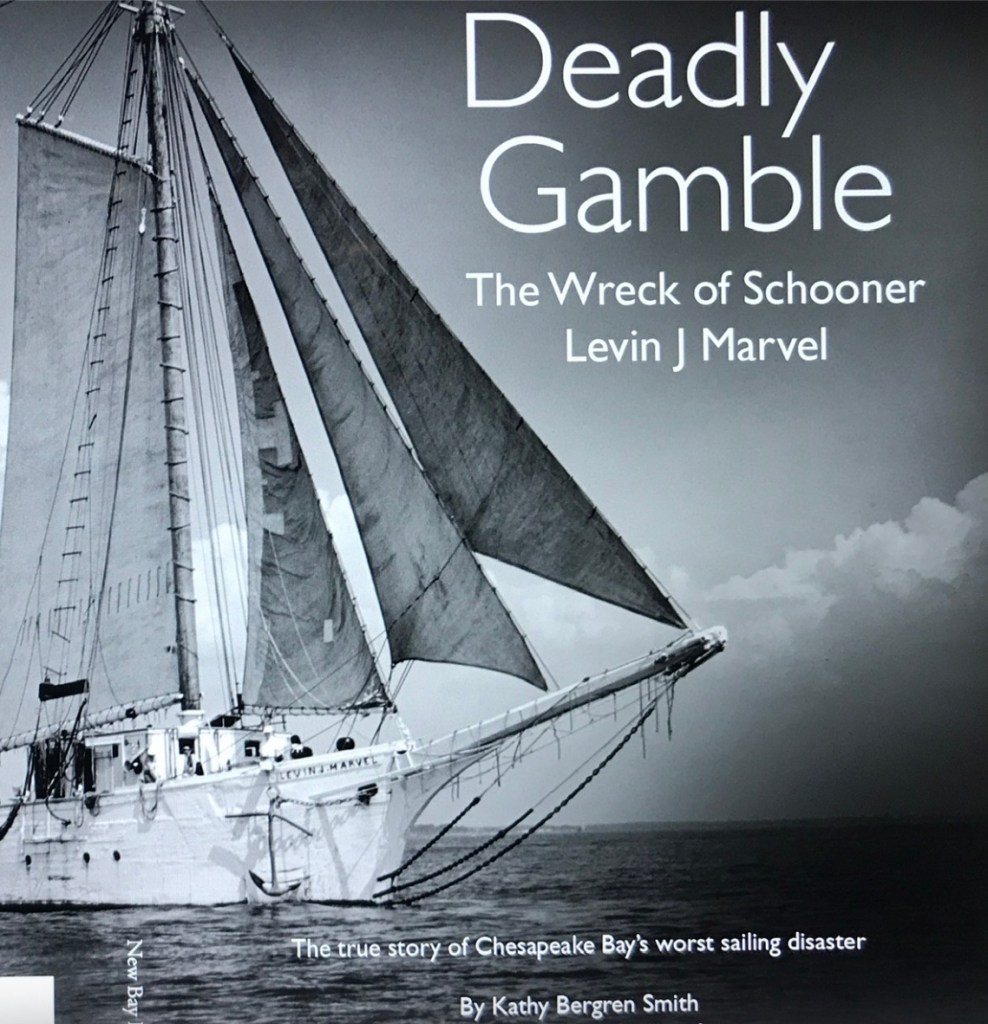
The old schooner was built in 1891 and had spent a career hauling timber from North Carolina to Baltimore and returning with fertilizer. The three-master had squat lines, like a barge. Shallow draft, with a centerboard, the Marvel was also very slow. It belonged to a class of boats built in Bethel, Delaware, called “ram schooners.”
As trucks and trains became a faster and more economical option for transporting most cargoes, the freight schooners on the bay needed to find other work. Many were unceremoniously dismasted and converted into diesel powered freight boats, hauling oysters or produce from rural areas to city markets. Fate had very different plans for the Marvel and its sister, the Edwin and Maud. The big schooners were sold to Herman Knust, a former B&O Railroad executive who had a good idea for a new line of business.
He bought the boats for $18000 each in 1944 and took them to the shipyard and had them overhauled as passenger cruise vessels. The spacious cargo holds were piped with running water and built out with 17 staterooms, each with a porthole and sink. There were heads built in and a dining saloon. Knust correctly intuited that there was a market for windjammer cruises on the Chesapeake on the rustic old boats. The idea was a “dude cruise,” with passengers getting a taste of the seafaring life by helping out lines, enjoying evenings on the deck and visiting historic ports of call like St. Michaels, Maryland, a tiny fishing village, now home to the Chesapeake Bay Maritime Museum.
Chesapeake Bay Vacation Cruises had a successful run. Knust sold the Edwin and Maud to a windjammer operator from Maine, who changed the name to Victory Chimes. This vessel, with its long history, is still operating today as a passenger cruise boat in Rockland, Maine. It is on the National Register of Historic Landmarks and enjoys a popular following. We will report more on the Victory Chimes later this summer as the blog will be posted from the deck on the anniversary of the Marvel’s foundering.
The Marvel was not as lucky as the Victory Chimes…Knust laid her up in Salisbury, Maryland, far up the winding Nanticoke River and there she was mothballed until 1954, when John Meckling purchased her for $7500. He had dreams of reviving the dude cruises.
By then, the Marvel was in quite rough shape. Meckling and his silent partner, short of working capital, made enough repairs to the hull to get the ship back in service. Getting to Booz Brothers Shipyard Baltimore was quite a trip in itself…stay tuned for that story.
Meckling purchased the Levin J Marvel in the summer of 1954. The boat was mothballed on the Wicomico River in Salisbury, Maryland. Meckling, a talented tinkerer, set to work immediately and planned on getting the old boat to Annapolis in time to start cruises in late July. In fact, he began an advertising campaign, placing ads in Philadelphia and New York papers, as well as the Baltimore Evening Sun.
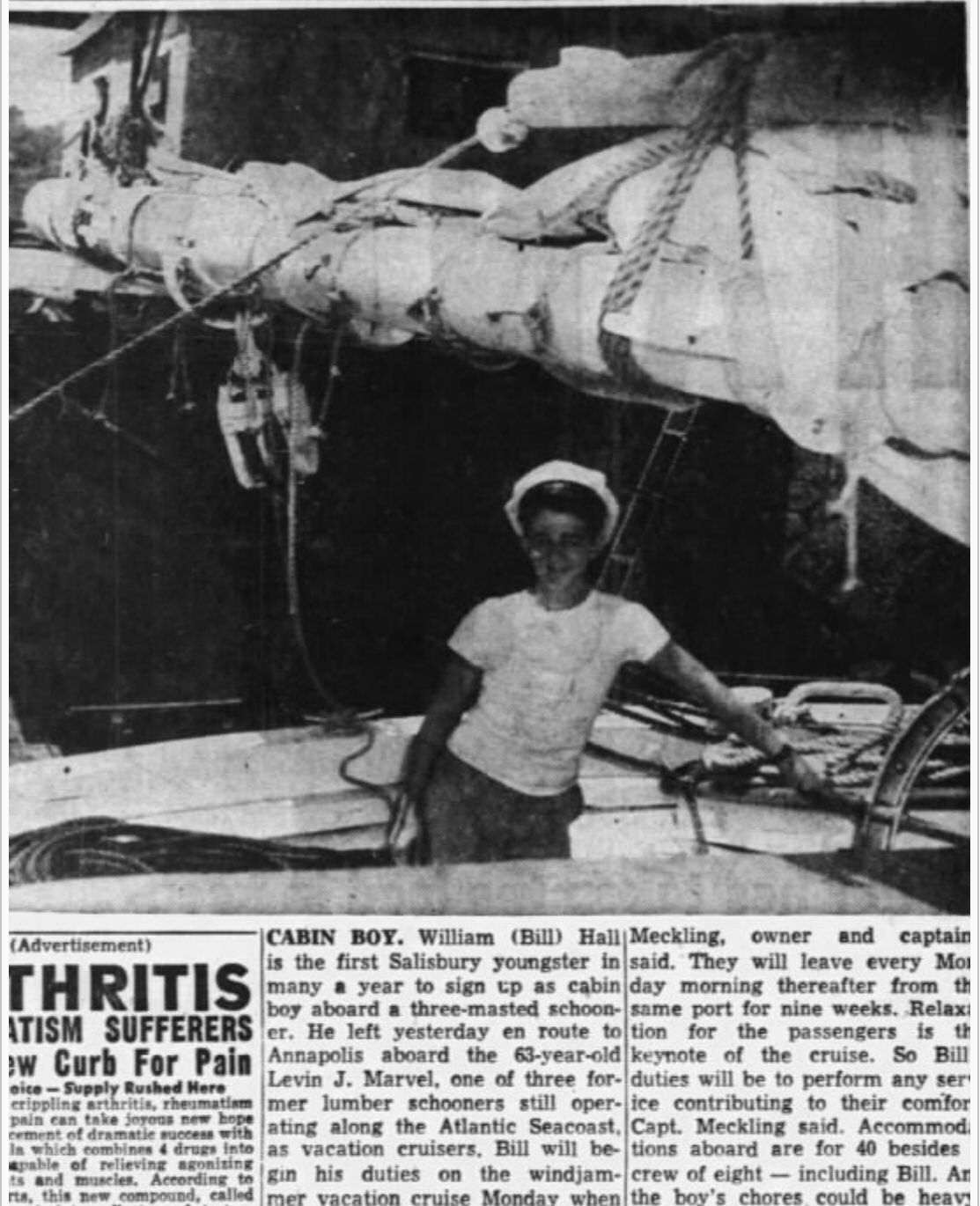
He hired the captain who had run the Marvel’s sister ship, Edwin and Maud, to help him deliver the boat to Annapolis. The ships’ company also included Bill Hall, a 16-year old Wicomico High School rising senior, as cabinboy, two local men as deckhands, Meckling’s 6-year old son and two parakeets. On July 16, 1954, the Marvel set sail for the first time in over a year.
About eight miles into the voyage, Capt. Tawes noticed the ship was sluggish and it’s bow was riding lower in the water. Meckling discovered that seams in the stern were open and the old ship was taking on an alarming amount of water.
“Bill turned green with the fright,” Meckling recalled in a newspaper article. The captain grounded the Marvel intentionally to keep it from sinking. The Salisbury Fire Department boat came to pump it out but needed further assistance from Coast Guard. After several hours, the Marvel refloated on high tide with no injuries and only an escaped parakeet. Meckling took the boat to Brown’s Marine Railway in White Haven. The captain returned to Salisbury with he cabinboy, leaving Meckling and the deckhands to pick up the pieces.
This first setback might have spooked a less optimistic boat owner, but Meckling was undaunted. He quipped to the local paper hat the near sinking was actually good, the planks of he old wooden ship needed to swell and a $50 recaulking was all that was needed to get underway. The railway was too busy to haul him quickly so the Marvel was off to Baltimore for the repairs.
Already, Meckling was behind schedule, his first cruise had to be cancelled and angry ticket holders mollified.
A jaunty Capt. Meckling in the Salisbury Daily Times
Bill Hall, before the near-sinking, the Daily Times
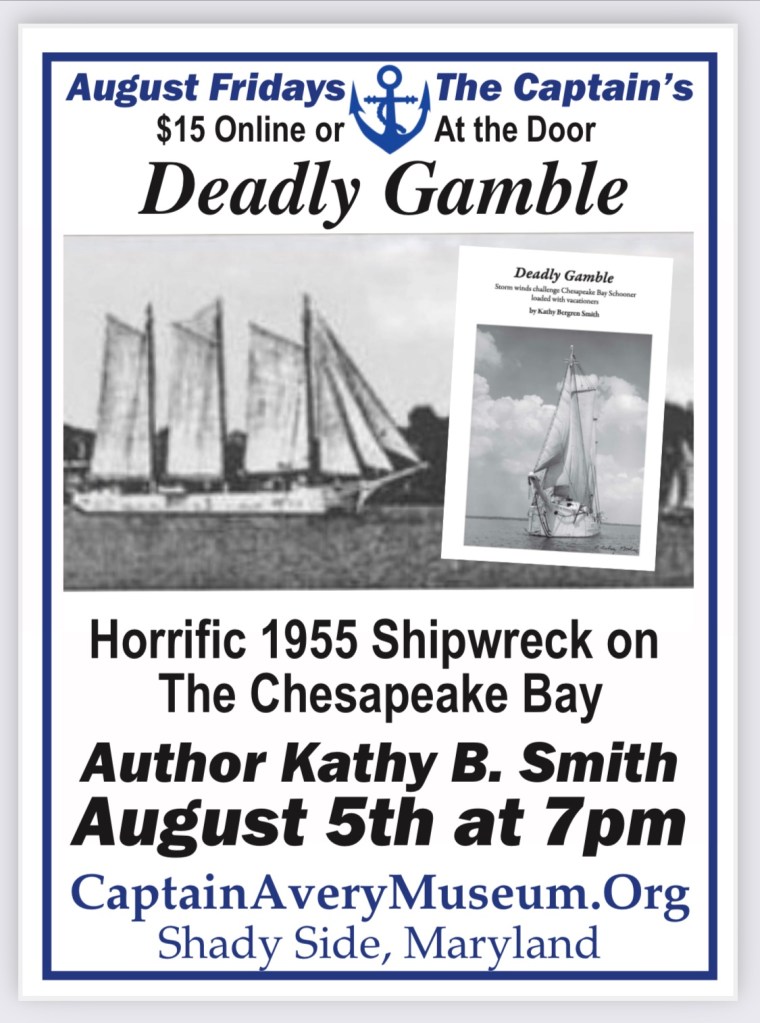
On August 12, 1955, the schooner Levin J Marvel capsized in the Chesapeake Bay near the town of North Beach, Maryland. The ship sought shelter from Hurricane Connie in Herring Bay during a weeklong adventure cruise that became deadly. The Marvel’s 23 passengers and 4 crew-members were washed into the storm about a quarter mile from shore. The townspeople organized a remarkable rescue effort in severe conditions and saved many lives that day. In the end, fourteen passengers lost their lives, the largest number of fatalities on the Chesapeake to this day.
For the Marvel’s captain, the storm was just the beginning. The Coast Guard decided to make the disaster an object lesson in order to persuade congress to legislate an inspection regime for passenger vessels. He was painted as the incompetent master of a decrepit ship and charged with negligence and manslaughter. He might have ended his days in prison if not for the pro bono work of a retired Baltimore magistrate.
Follow this story and look for book news…if you have a story about the Marvel to share…contact us!






 Levin J Marvel